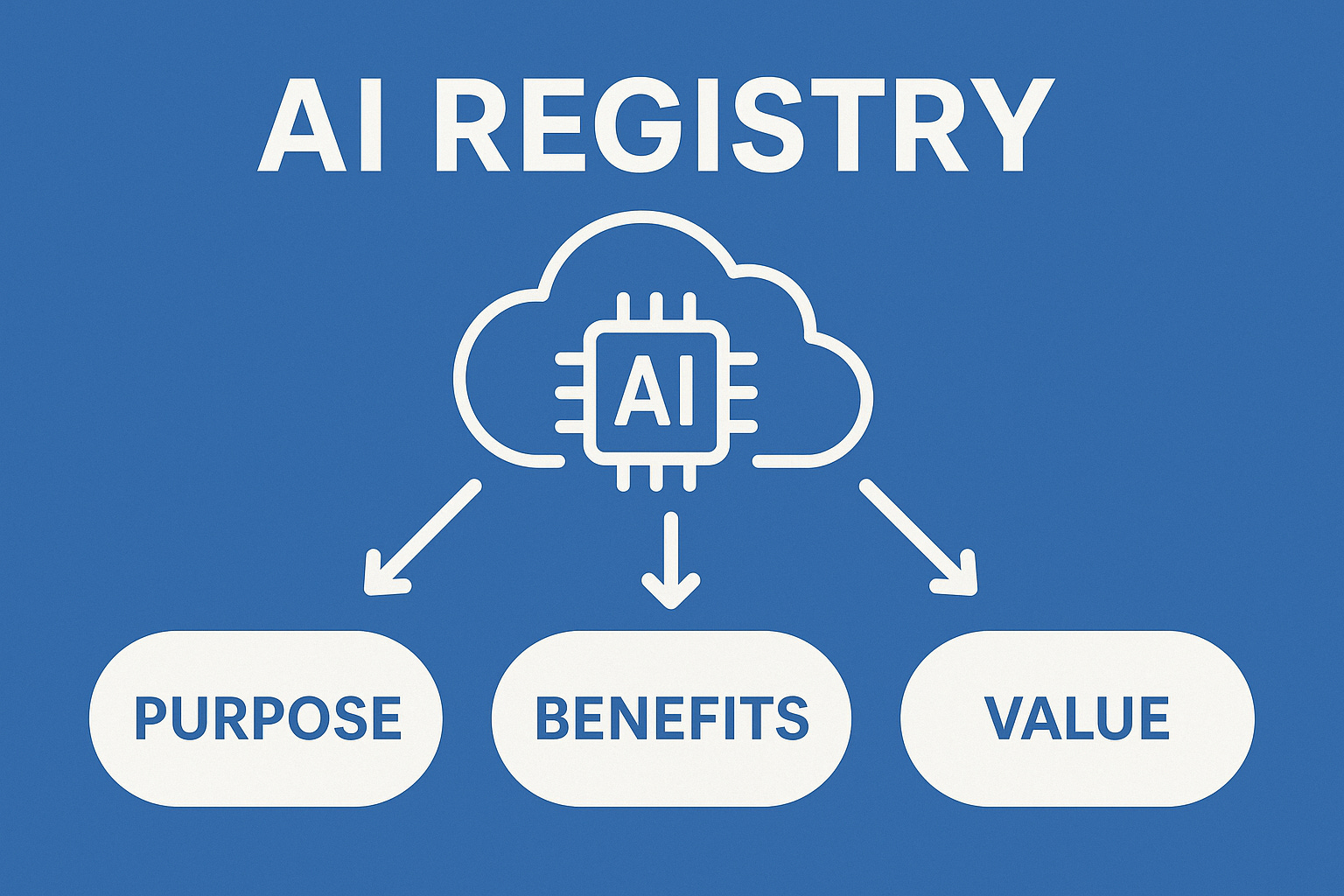
Digital landscape is evolving rapidly and implementing AI responsibly is crucial and as artificial intelligence (AI) becomes an integral part of modern enterprises, managing it effectively is critical. That is where AI registry comes into the picture. AI Registry becomes an important tool in managing your organization’s AI journey with transparency, accountability, and control. To know more on how Biotale can help you with your AI journey, contact our AI experts.
The function of an AI registry is to provide centralized tracking of all AI projects within an organization. It offers a detailed and transparent view of project details, ownership, and responsible stakeholders. This centralized approach helps in improving risk and impact of different AI systems, that enables prioritization and communication of their value.
AI registry helps to enhance accountability by making individuals and teams accountable for the successes and failures of AI projects, thus creating a culture of responsibility. An AI registry also serves to manage compliance by recording executed security controls and data usage practices, which facilitates compliance with regulatory and ethical requirements.
What is AI registry and its benefits?
AI has become a bigger part of everyday business, keeping track of all your models, tools, and systems can get overwhelming. That’s where an AI registry comes in—it acts like a central dashboard for everything AI across your organization. It helps you stay on top of regulations, maintain transparency, and get the most out of your AI investments.
Curious how this could work for your team? Let’s connect—Biotale can help you explore the real value of setting up an AI model registry for your enterprise.
What are the benefits of a centralized AI registry:
1. Governance and compliance: Consider an AI registry as the focal point for everything AI related within your company. It keeps all of your initiatives and models in line with your internal policies and key laws like the AI Act, GDPR, and HIPAA. It's a useful strategy to maintain audit readiness, increase openness, and gain confidence from both internal and external stakeholders. This is your method for staying ahead of the curve while maintaining clarity and simplicity if governance and compliance have ever felt like a changing target. Delve into the future of Artificial Intelligence and redefine your tomorrow today!
2. Transparency and accountability: Having a clear record of who built what, for what purpose, and how it's performing fosters accountability among teams and stakeholders.
3. Risk management: By documenting risks, testing results, and fail-safes, organizations can identify and resolve issues early minimizing reputational or operational damage.
4. Reusability and efficiency: Well-documented pipelines and models may be modified or reused for other projects, which reduces development costs and time.
5. Collaboration across teams: With one central hub, data scientists, engineers, product managers, and compliance teams can work together more effectively. Want to know more on how Biotale can help you build an AI compliance framework.
6. Faster audits and reporting: pre-logged metadata, model decisions, and usage stats make it easier to generate audit reports and respond to inquiries from legal or leadership teams.
Conclusion:
Every AI system should be registered, as this lays the groundwork for responsible, efficient, and compliant AI operations. The advantages are clear: enhanced visibility, robust governance, effective risk management, compliance assurance, and seamless collaboration. Ultimately, this leads to AI that is not only trustworthy but also highly effective across the organization. Embracing this practice will empower your teams and elevate the impact of your AI initiatives. Connect with our experts and understand how Biotale can create new opportunities, enhance existing workflows, enable impossible tasks – Transform your organizations.


